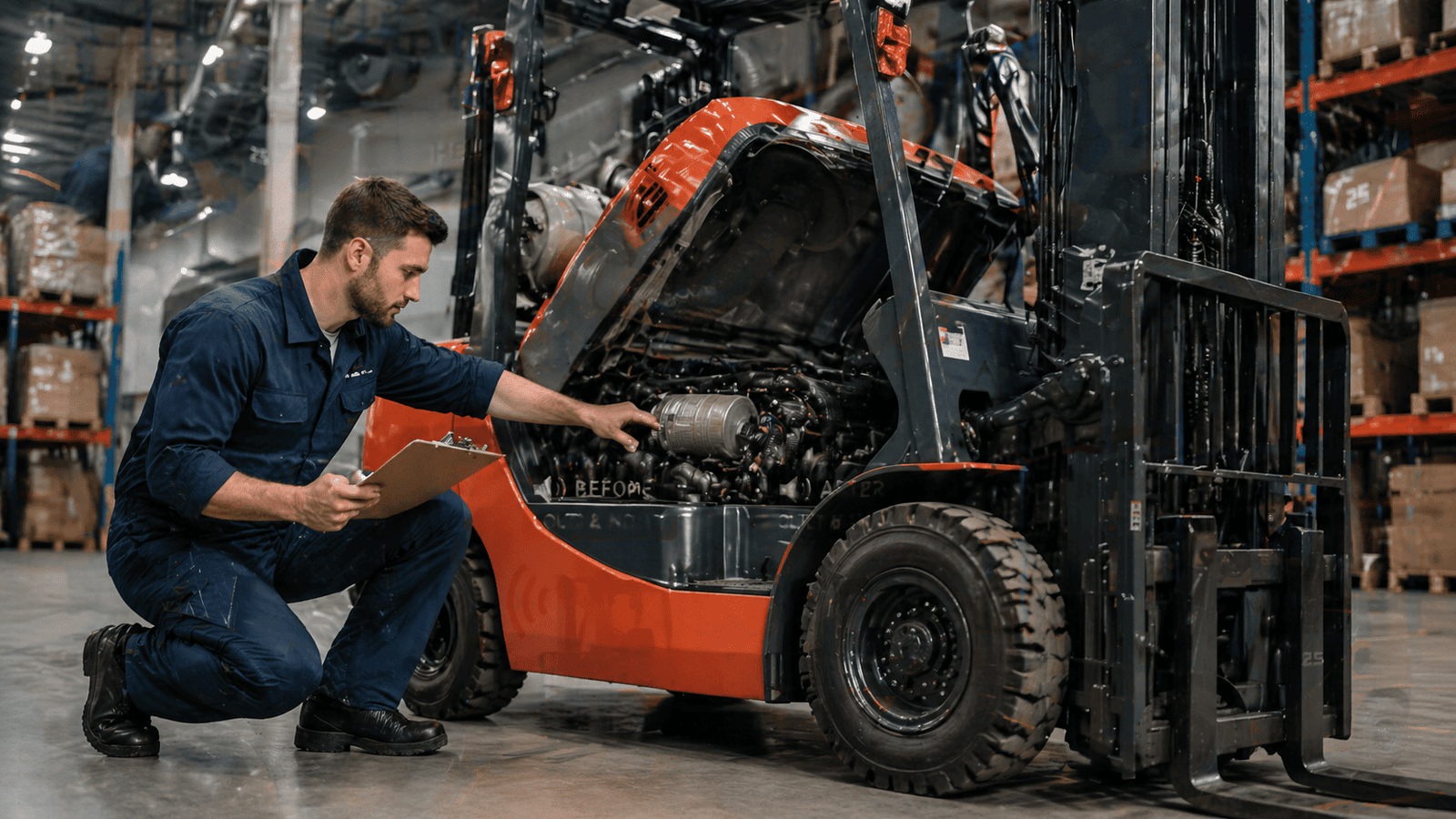
[A noisy gas forklift is more than an annoyance. It disrupts work and signals hidden problems1 that could lead to costly downtime. But simple maintenance can make a big difference.
You can reduce gas forklift noise by performing regular maintenance2. Focus on the exhaust system, engine, hydraulics, and chassis. Tightening loose parts, lubricating components, and replacing worn-out mufflers are key steps. This treats noise as a symptom of wear3, preventing bigger failures.
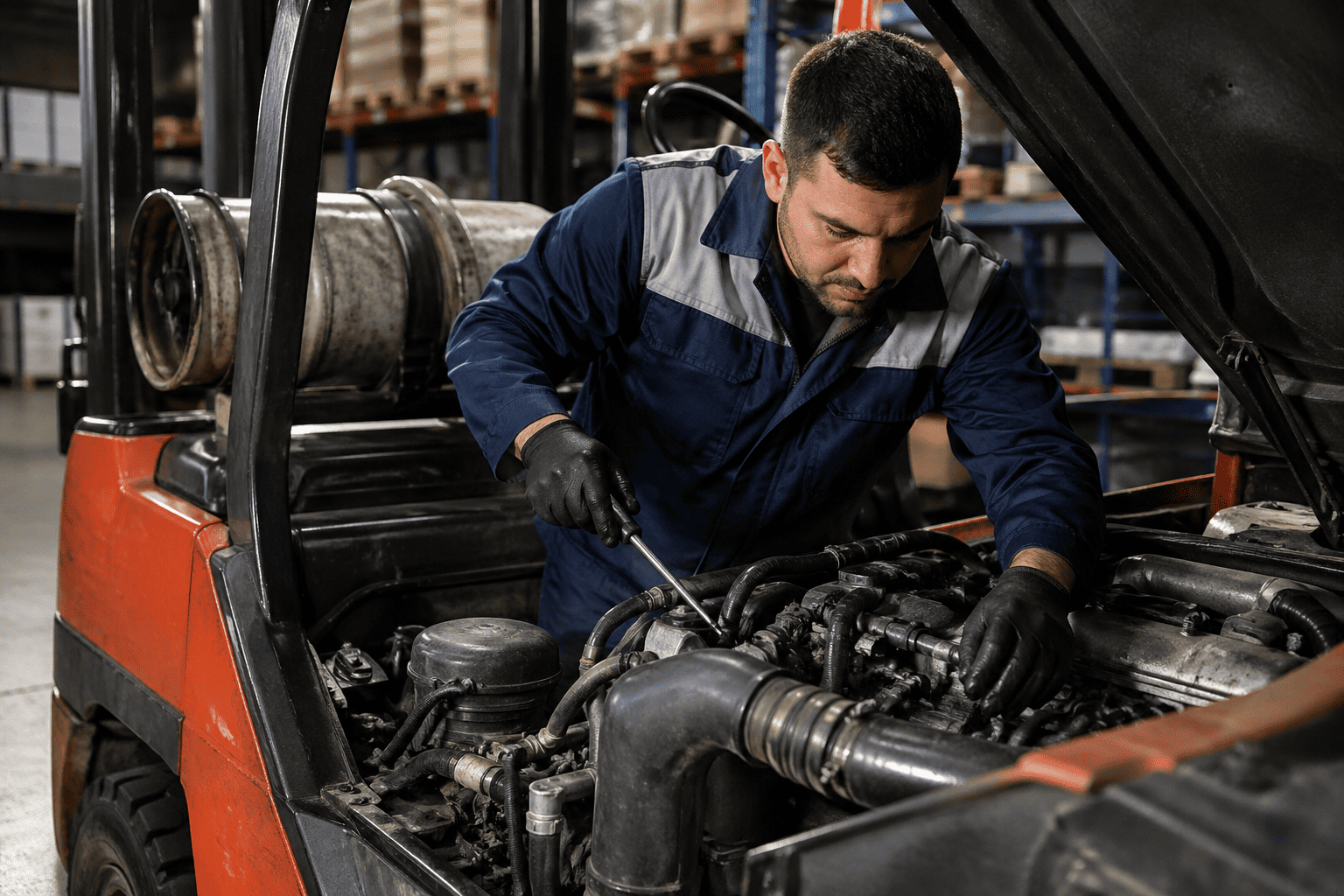
That loud rumbling from your gas forklift isn't just part of the job. It's a clear signal that your machine is trying to tell you something. Ignoring it can be a costly mistake. In my work, I've seen how a simple noise complaint, when investigated, can uncover issues that prevent a major breakdown. Let's break down what those sounds mean and how you can address them before they turn into major repair bills.
Why Is Your Gas Forklift Getting Louder?
That new rattle or hum isn't just background noise. It's a warning sign. Ignoring it can let a small issue turn into a major breakdown, stopping your operations completely.
A gas forklift gets louder because parts are wearing out. The most common causes are a failing muffler, loose engine components, worn hydraulic pumps, or even bad tires4. Think of noise as a symptom of a deeper mechanical problem that needs your attention.
In my experience as a supplier, one of the first things a potential buyer of used equipment asks about is how the machine sounds. A loud forklift is often a sign of poor maintenance history5. It's not just about comfort; it's a diagnostic tool. When a manager calls me about a machine getting louder, I tell them to treat it like a fever. It’s the body of the machine telling you something is wrong internally. Ignoring it won't make the problem go away. Instead, it lets wear and tear accelerate, turning a cheap fix into an expensive failure. Understanding the source of the noise is the first step in diagnosing the health of your equipment.
Common Noise Sources
Different sounds often point to different problems6. Learning to distinguish them can help you or your technician pinpoint the issue faster.
| Sound Type | Possible Cause | What It Means |
|---|---|---|
| Loud Roaring | Damaged Muffler / Exhaust Leak | The system that dampens engine noise is broken. |
| High-Pitched Whining | Low Hydraulic Fluid / Failing Pump | The hydraulic system is straining to work. |
| Rattling / Clanking | Loose Body Panels / Counterweight | Components are vibrating against the chassis. |
| Grinding / Humming | Worn Wheel Bearings / Drivetrain Issue | Rotating parts are failing due to friction. |
What's the First Step in a Forklift Noise Check?
You know the forklift is too loud, but where do you even start looking? Random checks waste time and can miss the real issue. A focused approach finds the problem faster.
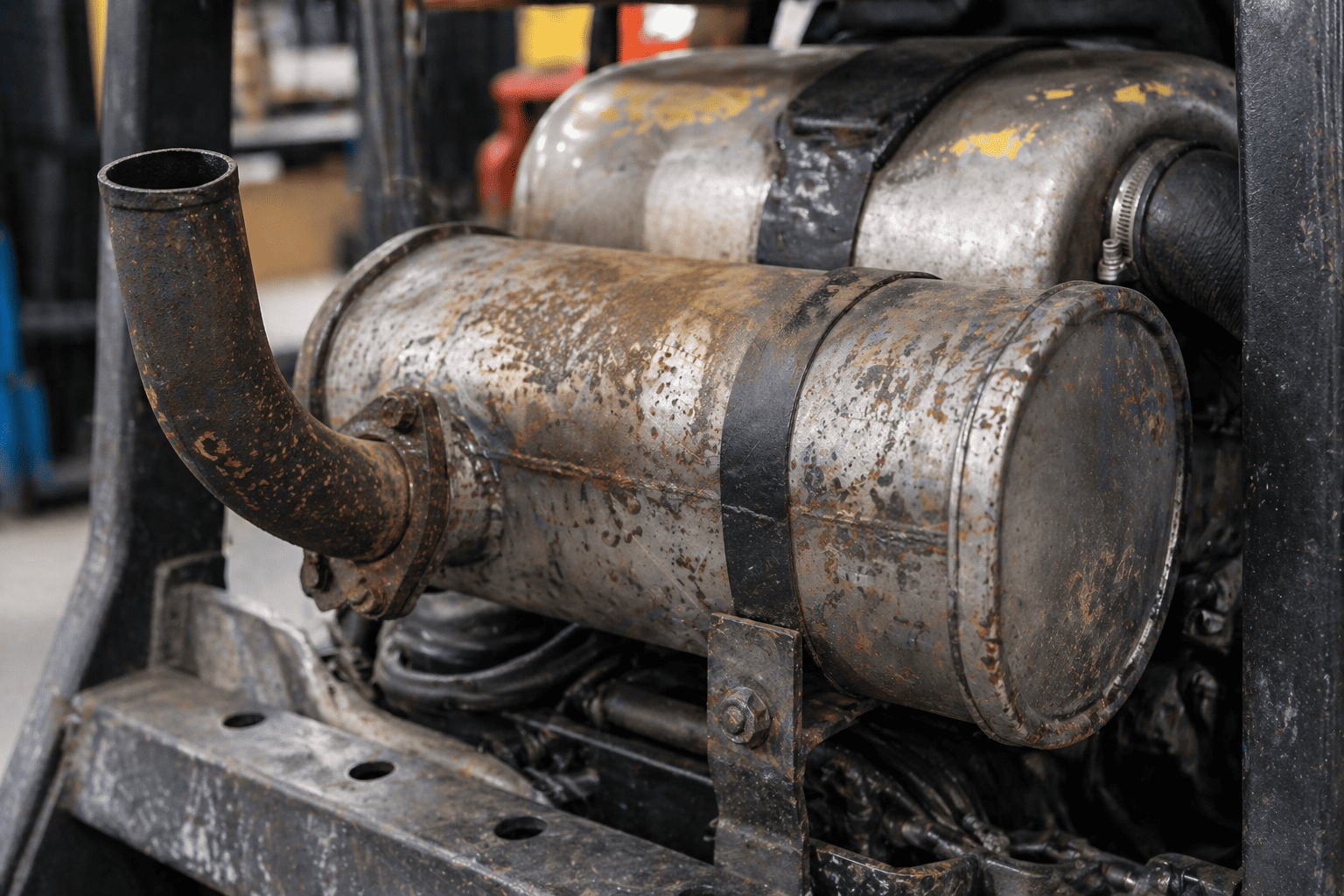
Start your noise check with the exhaust system7. It's the most common source of loud noise on a gas forklift. Look for rust, holes, or loose connections on the muffler and exhaust pipe. A damaged muffler can't do its job of dampening engine sound.
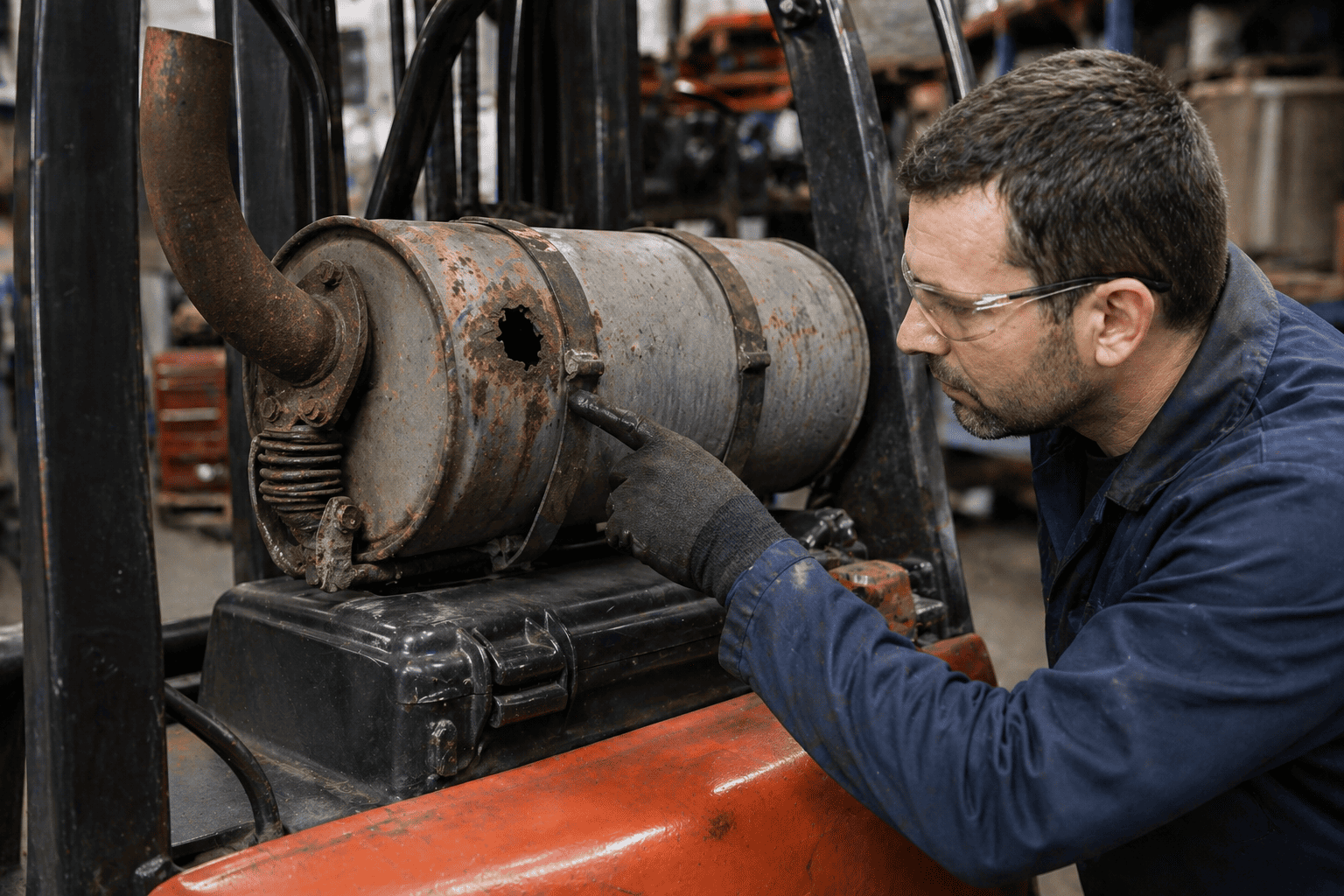
The exhaust system is designed to do one thing: manage and quiet the incredibly loud noise from the internal combustion engine. When it fails, the effect is immediate and obvious. I always advise starting here because it's often the easiest problem to spot and fix. A simple visual inspection can tell you a lot. You don't need to be a master technician to see a hole rusted through a muffler or feel a loose clamp connecting the pipe to the engine manifold. These issues not only create a racket but can also be a safety hazard. A leaking exhaust can release carbon monoxide into your workspace8, which is a serious risk for operators and other staff.
Inspecting the Exhaust System
Follow these simple steps for a basic check. Always do this when the engine is cool.
- Check the Muffler: Look for visible holes, cracks, or significant rust. Tap it gently with a rubber mallet; a rattling sound can mean the internal baffles have broken loose.
- Inspect the Pipes: Trace the exhaust pipe from the engine to the muffler. Look for black soot stains around joints, which indicate a leak9.
- Test the Connections: Gently try to wiggle the pipes and muffler. Everything should be solid. Any looseness at the clamps or mounting brackets will cause rattling and can lead to bigger cracks over time.
If you find damage, it's usually best to replace the part. Patching is a temporary fix at best.
Which Maintenance Tasks Can Quiet a Forklift Down?
You've checked the exhaust, but the noise persists. The problem seems complicated and expensive. But often, simple, routine maintenance tasks are all that's needed to restore quiet operation.
Beyond the exhaust, regular maintenance is key. Lubricate moving parts like the mast chains. Tighten loose bolts on body panels and counterweights. Check the hydraulic system for whining sounds, and ensure tires are properly inflated and not excessively worn.
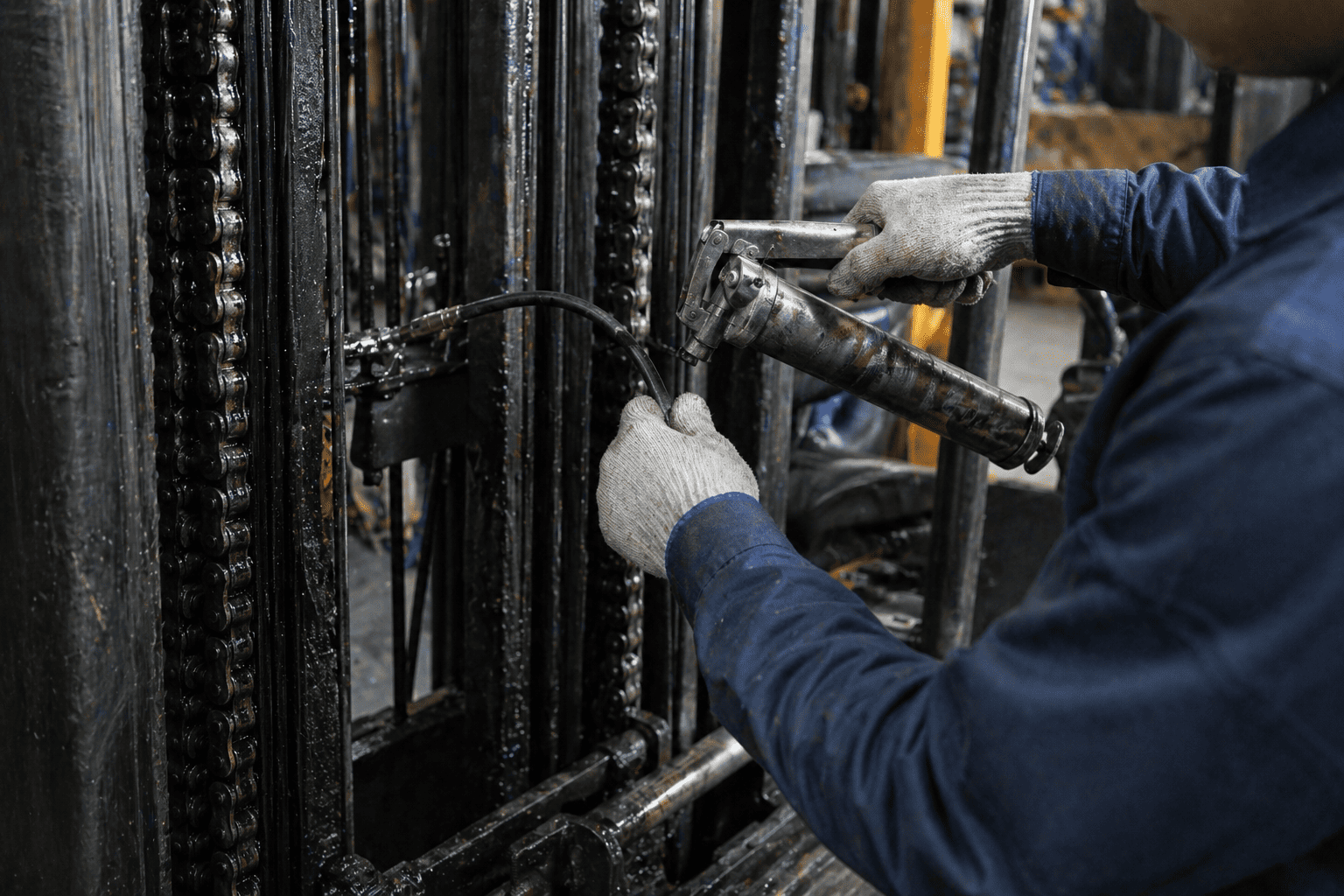
A forklift is a machine of many moving parts, and where there's movement, there's potential for noise. Vibrations from the engine travel through the entire chassis. If anything is loose, it will rattle and clang. Friction from unlubricated parts will cause squealing and grinding. I often remind clients that a quiet machine is a well-maintained machine. A simple walk-around inspection with a wrench and a grease gun can solve 50% of non-exhaust-related noise problems. It’s about being proactive. Don't wait for something to get so loud that it's unbearable. Regular checks keep the machine tight, smooth, and quiet.
Your Noise-Reduction Maintenance Checklist
Integrate these checks into your regular maintenance schedule.
- Chassis and Body Panels:
- Action: Walk around the forklift and tighten any loose bolts on the engine cover, side panels, and overhead guard.
- Why: These large panels act like a drum when they're loose, amplifying engine vibrations into loud rattles.
- Mast and Chains:
- Action: Lubricate the mast channels and lift chains according to the manufacturer's schedule10.
- Why: Dry metal-on-metal contact creates loud squeaking and groaning sounds during lifting and lowering operations.
- Hydraulic System:
- Action: Check the hydraulic fluid level. Listen for a high-pitched whining sound when operating the hydraulics.
- Why: Low fluid makes the pump work harder, causing a distinct whine11. If the fluid is full and the noise persists, it could be a sign the pump is failing. This requires a professional technician.
- Tires and Drivetrain:
- Action: Ensure tires are properly inflated and check for uneven wear.
- Why: Worn or underinflated tires can create humming noises and transfer more vibration to the chassis12.
How Can Noise Reveal Risks in a Used Gas Forklift?
Buying a used forklift seems like a great deal, but what if it has hidden problems? A noisy machine could be a sign of neglect, leading to unexpected repair bills right after purchase.
When inspecting a used gas forklift, pay close attention to noise. Rattles, whines, or loud engine sounds are red flags. They often indicate poor maintenance, a worn-out engine, or a failing hydraulic system. Using noise as a diagnostic tool helps you avoid buying a liability.
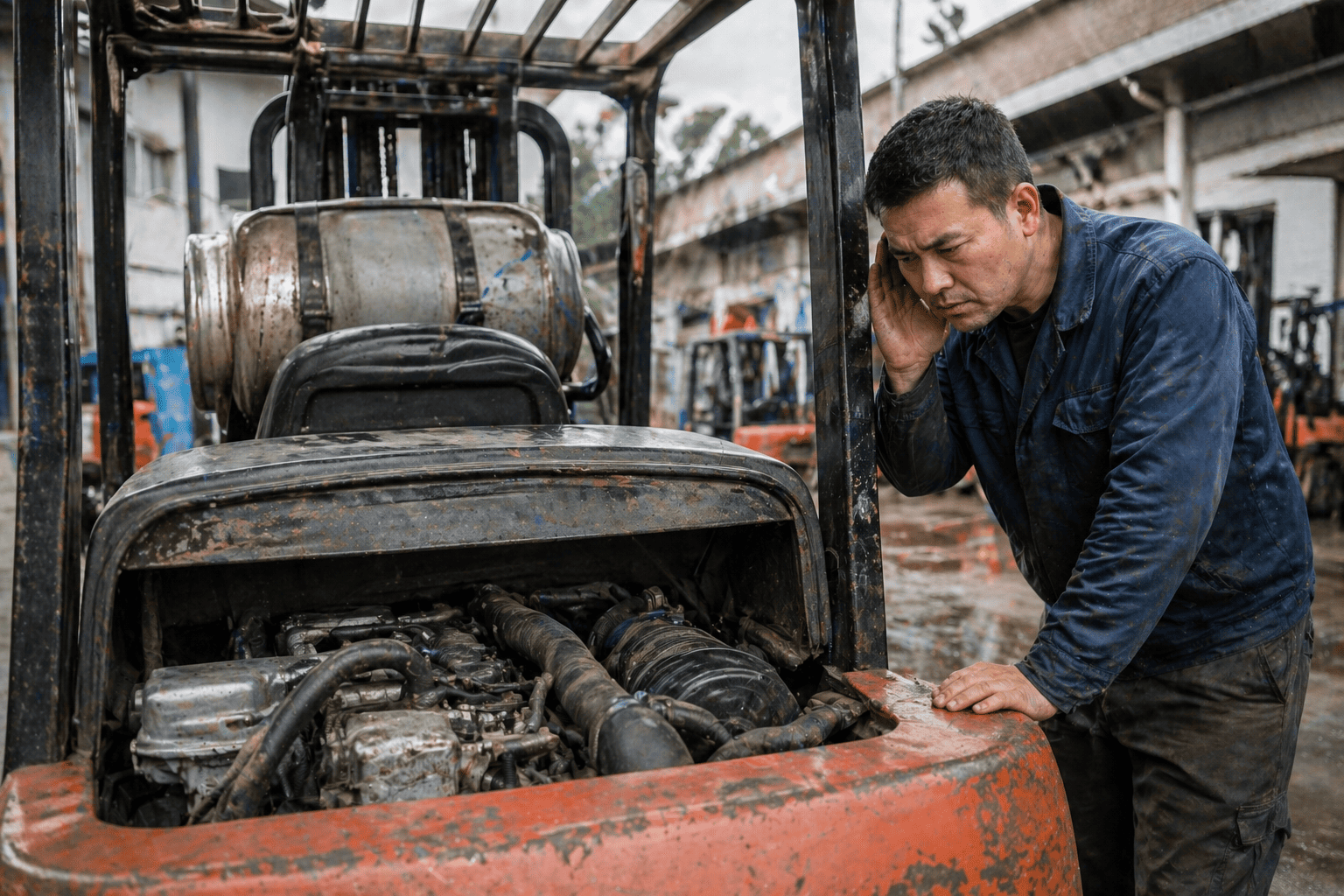
When my team and I inspect used equipment for export, the sound check is one of the most critical parts of our evaluation. A seller can clean a machine and give it a fresh coat of paint, but they can't easily hide the sounds of a worn-out engine or a failing transmission. I tell my clients that noise is the forklift's resume. A quiet, smooth-running engine tells you it was likely cared for. A loud, clattering machine tells a story of hard use and deferred maintenance. That noise isn't just an annoyance; it’s a direct indicator of future costs. The grinding you hear today could be a transmission rebuild next month. The whining from the hydraulics might be a new pump you'll have to buy.
Noise Red Flags for Used Forklifts
Listen for these sounds during a pre-purchase inspection.
| Noise Red Flag | Potential Problem | What It Means for You |
|---|---|---|
| Engine Knocking/Ticking | Internal engine wear (bearings, lifters) | High risk of a very expensive engine rebuild or replacement. |
| Screaming from Hydraulics | Failing hydraulic pump or clogged filter | Imminent failure of the lifting system. Costly and creates downtime. |
| Grinding When Driving | Worn transmission or differential gears | A major drivetrain repair is likely needed soon. |
| Excessive Rattling | Widespread neglect (loose parts, broken mounts) | Indicates a lack of basic care. If they didn't tighten bolts, what else did they ignore? |
Always ask to run the forklift under load (lifting a pallet) to see how it sounds when it's working hard. This often reveals problems that aren't audible when the machine is just idling.
Conclusion
Listening to your forklift and performing regular maintenance reduces noise, improves safety, and saves you from expensive, unexpected repairs. It's a smart business decision that protects your investment.]
"Occupational Noise Exposure - Overview - OSHA", http://www.osha.gov/noise. Occupational noise guidance identifies excessive workplace noise as a factor that can interfere with communication and worker safety; maintenance literature also treats abnormal machine noise as a possible indicator of mechanical faults, although it does not diagnose a specific forklift defect by itself. Evidence role: general_support; source type: government. Supports: A noisy gas forklift can disrupt work and indicate hidden mechanical problems.. Scope note: This supports the general safety and diagnostic relevance of noise, not the exact cause of noise in a particular forklift. ↩
"1910.178 - Powered industrial trucks. | Occupational Safety ... - OSHA", http://www.osha.gov/laws-regs/regulations/standardnumber/1910/1910.178. Industrial truck maintenance guidance requires regular inspection and removal from service when defects are found; this supports the role of maintenance in correcting noise-producing defects, though it does not quantify expected noise reduction for gas forklifts. Evidence role: general_support; source type: government. Supports: Regular maintenance can help reduce gas forklift noise.. Scope note: The source is likely to support inspection and defect correction generally rather than provide measured decibel reductions. ↩
"A Brief Review of Acoustic and Vibration Signal-Based Fault ... - PMC", https://pmc.ncbi.nlm.nih.gov/articles/PMC9959905/. Condition-monitoring research describes changes in vibration and acoustic signals as indicators of wear and developing mechanical faults, providing contextual support for treating abnormal forklift noise as a maintenance symptom rather than mere nuisance. Evidence role: mechanism; source type: paper. Supports: Abnormal noise can be treated as a symptom of component wear.. Scope note: Most condition-monitoring studies address rotating machinery broadly, so the evidence is contextual rather than forklift-specific. ↩
"Powered Industrial Trucks (Forklift) eTool", http://www.osha.gov/etools/powered-industrial-trucks/operating-forklift/pre-operation. Forklift service and safety references commonly list exhaust defects, loose or damaged parts, hydraulic malfunctions, and tire condition among inspection and maintenance items; this supports the plausibility of these components as noise sources, but may not establish their rank as the most common causes. Evidence role: general_support; source type: institution. Supports: Failing mufflers, loose components, hydraulic pumps, and tires are common sources of forklift noise.. Scope note: The source may support the listed components as inspection points without proving they are statistically the most common causes of noise. ↩
"Powered Industrial Trucks (Forklift) eTool", http://www.osha.gov/etools/powered-industrial-trucks/operating-forklift/pre-operation. Powered industrial truck inspection guidance emphasizes checking for unusual noises, leaks, loose parts, and other defects before operation, supporting the inference that persistent abnormal noise can reflect inadequate maintenance history; it does not prove maintenance history from noise alone. Evidence role: general_support; source type: government. Supports: A loud forklift may indicate poor maintenance history.. Scope note: Noise is only one indicator and cannot independently establish poor maintenance history. ↩
"Detection of Mechanical Failures in Industrial Machines Using ...", https://pmc.ncbi.nlm.nih.gov/articles/PMC9144725/. Mechanical fault-diagnosis literature uses acoustic and vibration signatures to distinguish classes of faults, supporting the general idea that different noises can indicate different mechanical problems; application to forklifts requires technician confirmation. Evidence role: mechanism; source type: paper. Supports: Different noise types can correspond to different mechanical problems.. Scope note: The evidence is general to machinery diagnostics and does not provide a complete forklift-specific sound chart. ↩
"Active Exhaust Noise Cancellation", https://cecas.clemson.edu/cvel/auto/systems/active_exhaust_noise_cancellation.html. Internal-combustion-engine references explain that mufflers and exhaust systems attenuate engine noise, supporting the rationale for inspecting the exhaust early when a gas-powered forklift becomes unusually loud; this does not prove it is always the first required diagnostic step. Evidence role: mechanism; source type: encyclopedia. Supports: The exhaust system is a logical early inspection point for loud gas forklift noise.. Scope note: The source supports the acoustic role of the exhaust system but not a universal inspection sequence for every forklift model. ↩
"eTool : Powered Industrial Trucks (Forklift)", http://www.osha.gov/etools/powered-industrial-trucks/workplace/enclosed-hazardous-areas. Occupational-safety agencies identify carbon monoxide as a hazardous product of internal-combustion engines and warn that engine exhaust in enclosed or poorly ventilated workplaces can cause dangerous exposure; this directly supports the safety concern from exhaust leakage. Evidence role: expert_consensus; source type: government. Supports: A leaking gas forklift exhaust can release carbon monoxide into the workplace.. ↩
"Is black soot the sign of an exhaust leak? | BobIsTheOilGuy", https://bobistheoilguy.com/forums/threads/is-black-soot-the-sign-of-an-exhaust-leak.174741/. Automotive and engine-maintenance references describe soot or carbon deposits near exhaust joints as a common visual sign of exhaust gas leakage, supporting the inspection cue; confirmation still requires physical inspection or testing. Evidence role: mechanism; source type: education. Supports: Black soot around exhaust joints can indicate an exhaust leak.. Scope note: This visual sign is suggestive rather than definitive because soot can have multiple causes depending on engine condition and fuel mixture. ↩
"eTool : Powered Industrial Trucks (Forklift) - Pre-Operation - OSHA", http://www.osha.gov/etools/powered-industrial-trucks/operating-forklift/pre-operation. Forklift maintenance standards and operator manuals require lubrication and inspection of lift chains and mast components at prescribed intervals, supporting the maintenance instruction; the exact lubricant and interval depend on the forklift model. Evidence role: expert_consensus; source type: institution. Supports: Mast channels and lift chains should be lubricated according to the manufacturer's maintenance schedule.. Scope note: Manufacturer schedules vary by model and operating environment. ↩
"Your Hydraulic Pump is WHINING? (It's Screaming for ... - YouTube",
. Hydraulic-system troubleshooting references identify low fluid level, aeration, and cavitation as causes of pump noise or whining, supporting the mechanism linking low hydraulic fluid to abnormal sound; a technician must verify the exact cause in a given forklift. Evidence role: mechanism; source type: education. Supports: Low hydraulic fluid can make a hydraulic pump produce a whining noise.. Scope note: Pump whine can also result from aeration, clogged filters, inlet restrictions, or pump wear, so low fluid is not the only explanation. ↩"Investigation of Noise and Vibration in Tires Through Analytical ...", https://docs.lib.purdue.edu/open_access_dissertations/1530/. Vehicle dynamics and tire-noise references show that tire wear, inflation pressure, and tread condition affect rolling noise and vibration transmission, supporting the claim by analogy to forklift tires; operating surfaces and tire type also influence the noise level. Evidence role: mechanism; source type: research. Supports: Worn or underinflated tires can increase rolling noise and vibration.. Scope note: Much of the evidence comes from general vehicle tire research rather than forklift-specific testing. ↩